Circuit-Zone.com - Electronic Projects
Posted on Wednesday, November 8, 2023 • Category: FM Transmitters
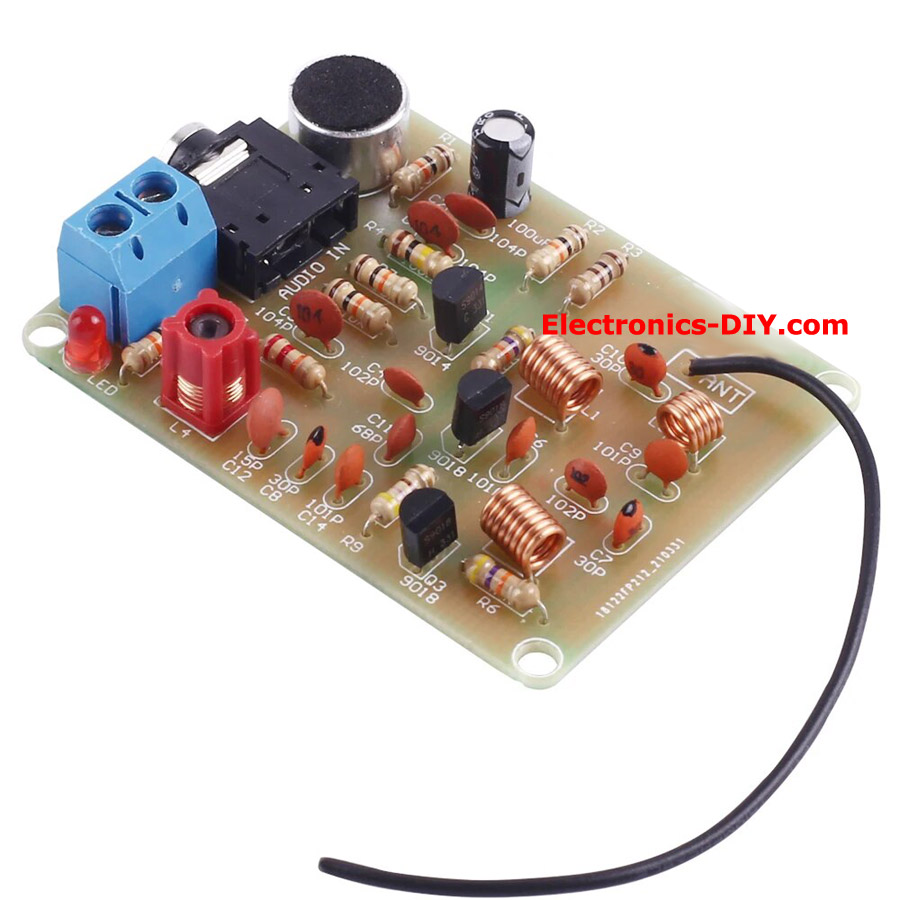
This little 88-108MHz FM transmitter has a range of up to 1 mile in the open. The transmitter consists of three stages. The first stage is an audio pre-amplifier built around 2SC9014 transistor, second stage is an oscillator built using 2SC9018 transistor, and third stage is an RF amplifier built around 2SC9018 transistor. RF amplifier stage increases an output power, range and stability by separating the antenna from the oscillator.
Posted on Tuesday, June 7, 2022 • Category: FM Radio / Receivers
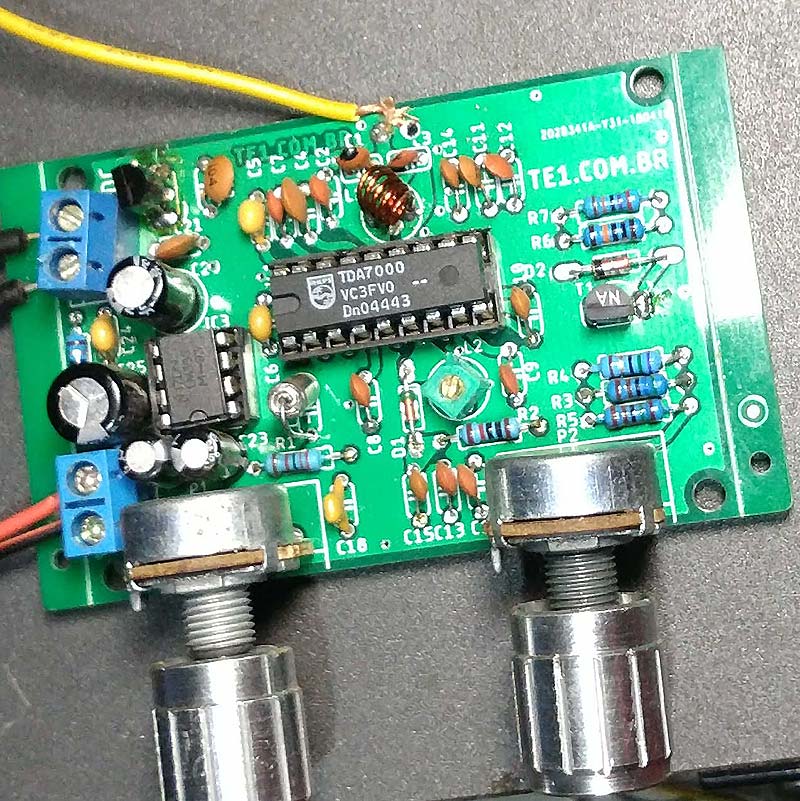 Simple circuit and easy to assemble DIY TDA7000 FM radio receiver with LM386 amplifier chip. Assembling an FM radio is always something interesting to the electronics enthusiast. TDA7000 which integrates a mono FM radio all the way from the aerial input to the audio output. Outside of the TDA7000 IC there is only one tunable LC circuit for the local oscillator, a few inexpensive ceramic capacitors and one resistor. The TDA7000 dramatically reduces assembly and post production alignment costs because only the oscillator circuit needs adjustment during manufacture to set the limits of the tuned frequency band. The complete FM radio can be made small enough to fit inside a calculator, cigarette lighter, key-ring fob or even a slim watch. The TDA7000 can also be used as receiver in equipment such as cordless telephones, CB radios, radio-controlled models, paging systems, the sound channel of a TV set or other FM demodulating systems.
Posted on Wednesday, May 4, 2022 • Category: FM Transmitters
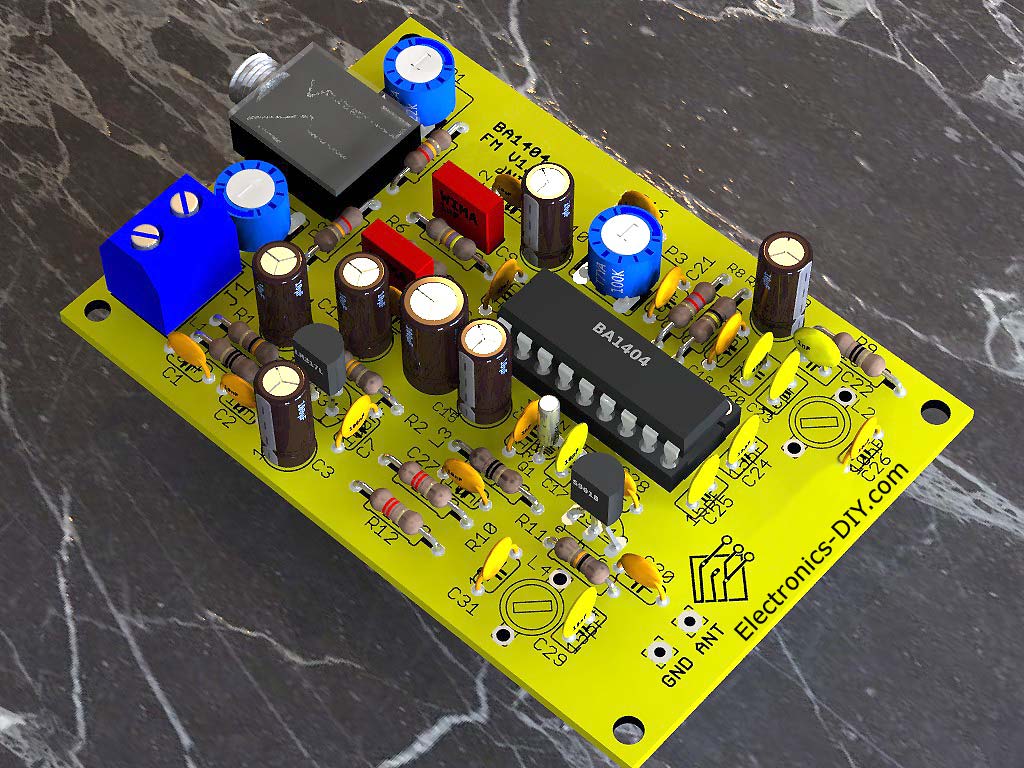 Build your own fairly simple high quality stereo FM transmitter circuit as shown in the photo. The circuit is based on the BA1404 chip from ROHM Semiconductors and S9018 amplifier for extending tansmitter's range. BA1404 is a monolithic FM stereo modulator that has built in stereo modulator, FM modulator, RF amplifier circuits. The FM modulator can be operated from 76 to 108MHz and the power supply for the circuit can be anything between 6 to 12 volts.
Posted on Wednesday, April 13, 2022 • Category: Power Supplies
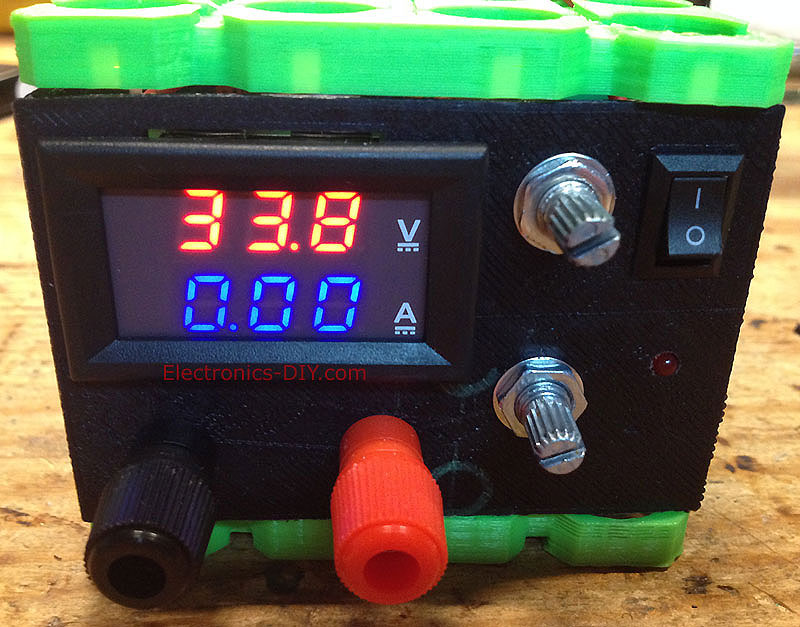 I have gone without a variable lab bench power supply for too long now. The power supply that I have been using to power most of my projects has been shorted out too many times. I have actually killed 2 by accident and needed a replacement. I had many 18650 lipo batteries lying around my workshop so I decided to use them to build a portable variable bench power supply that could be easily moved around and used on the go. The power supply consists of DC-DC step up power module, voltage and current display, a switch, standard size 10K trim pots, XT-60 and a balance connector for charging an array of 8x4 18650 batteries.
Posted on Wednesday, March 30, 2022 • Category: FM Transmitters
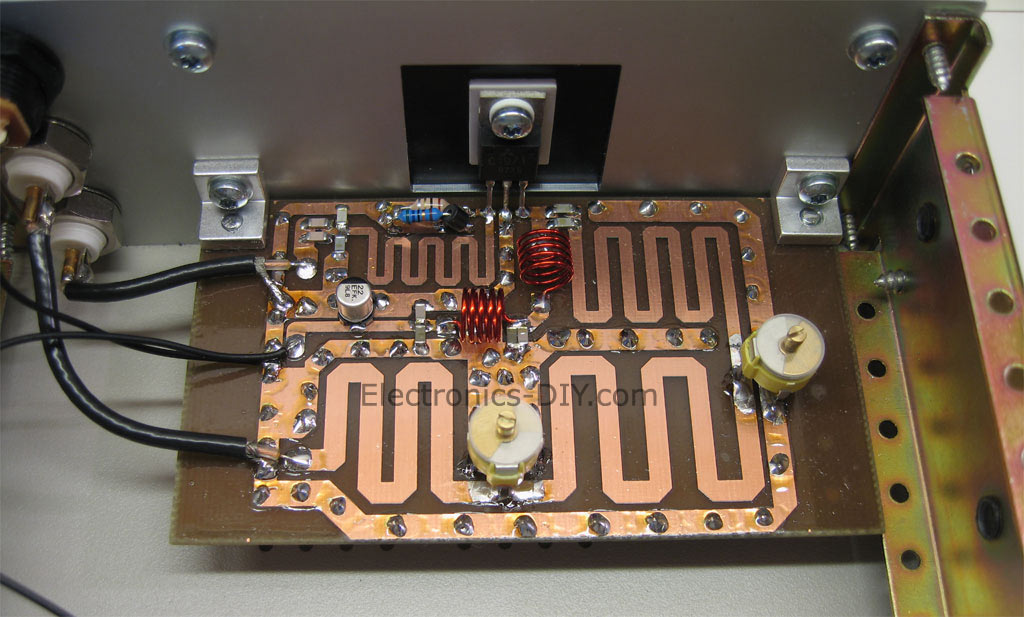 1 Watt FM Transmitter amplifier with a reasonably balanced design specified to boost a RF frequency in the 88 – 108 MHz spectrum. It may be considered a fairly sensitive configuration when used with quality RF power amplifier transistors, trimmers and inductors. It involves a power amplification factor of 9 to 12 dB (9 to 15 times). At an input power of 0.1W the output may be well over 1W. It's advisable to choose T1 transistor on the basis of the input voltage. For 12V voltage it is recommended to use transistors such as 2N4427, KT920A, KT934A, KT904, BLX65, 2SC1970, BLY87. For 18-24V voltage may may want to use transistors such as 2N3866, 2N3553, KT922A, BLY91, BLX92A. You may also consider using 2N2219 with 12V input voltage however that would only produce an output power of around 0.4W.
Posted on Monday, March 14, 2022 • Category: Miscellaneous
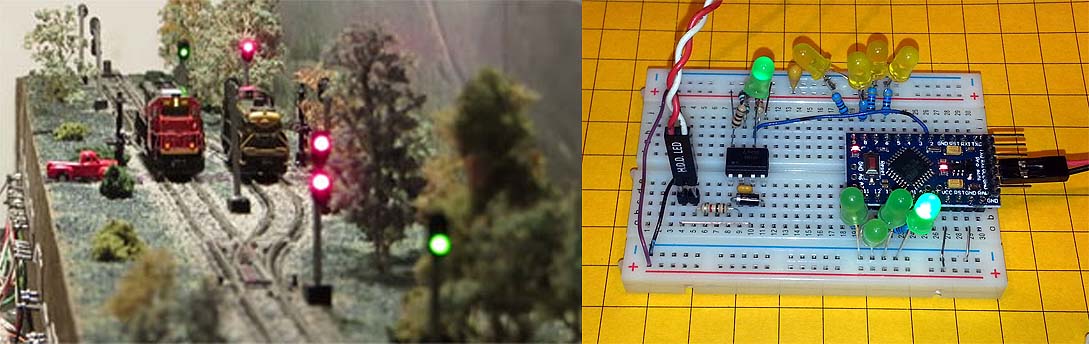 Modern model railroads are digitally controlled using a Digital Command Control (DCC) protocol similar to network packets. These data packets contain device address and instruction set that is embedded in the form of AC voltage and fed to train track to control locomotives. The great advantage of DCC over analog DC control is that you can independently control the speed and direction of many locomotives on the same train track as well as control many other lights and accessories using that same signal and voltage. Commercial DCC decoders are available on the market however their cost can add up pretty quickly if you have a lot of devices to control. Luckily you can build a simple Arduino DCC decoder yourself to decode DCC signal and control up to 17 LEDs / accessories per each DCC decoder.
Posted on Tuesday, February 1, 2022 • Category: FM Radio / Receivers
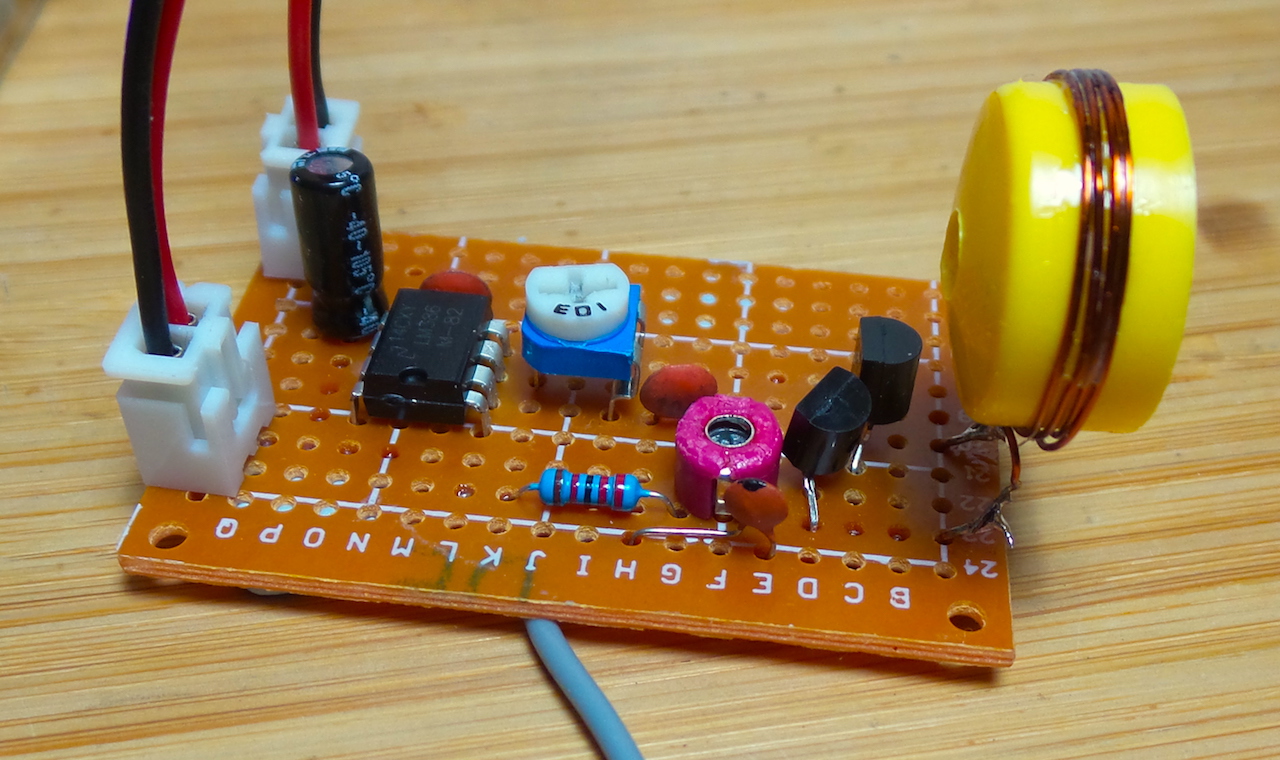 This is perhaps one of the simplest and smallest FM receivers for receiving local FM stations. It's simple design makes it ideal for a pocket sized FM receiver. The audio output of the receiver is amplified through LM386 amplifier chip that can drive a small speaker or headphones. The circuit is powered by three AAA or AA battery cells. FM receiver section uses two RF transistors for converting frequency modulated signals to audio. L1 coil and variable capacitor form a tuned tank circuit that is used for tuning to any available FM stations.
Posted on Thursday, January 20, 2022 • Category: FM Transmitters
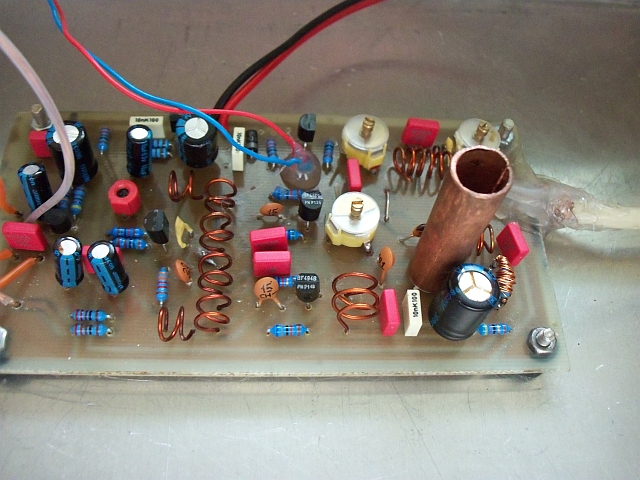 This a build of a well known FM transmitter called Veronica. Transmitter was built on two separate boards. The first board (pictured above) is the Veronica transmitter itself with output power of 600mW when powered by 12V voltage or 1W when powered by 16V voltage. The second board is an RF power amplifier that uses 2SC1971 transistor to amplify Veronica's output signal to around 7 Watts. Although transmitter can be powered with 9-16V voltage, it is recommended that both transmitter and amplifier is powered by 12V voltage as 600mW is an upper limit for driving 2SC1971 transistor.
Posted on Tuesday, January 4, 2022 • Category: FM Transmitters
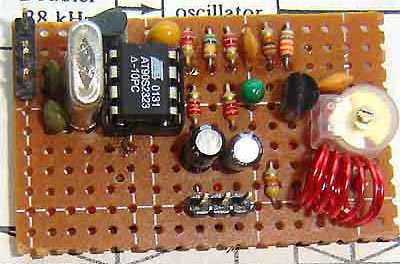 I had been fascinated with the idea of making simple stereo encoder for building Stereo FM Transmitter. Not that stereo means much to me away from the computer. I use an FM broadcast transmitter to relay the output of my computers to FM radios in the kitchen, the bedroom, the driveway, and out in the garden. Under those circumstances, I find that mono is plenty, whether it is music or radio programs from over the internet, since I am primarily occupied with something else anyway. When on my hands and knees in the garden, all the way up to my elbows in planting a bush, the music really does not seem any more sweet when its stereo. But that did not stop me from being fascinated with the idea of making a stereo encoder. Stereo always seemed like a lot of circuitry and bother for the slight benefit that came with it. That is, until a few weeks ago.
Posted on Friday, December 24, 2021 • Category: FM Radio / Receivers
High sensitivity TEA5711 receiver allows the reception of distant stations from over 150 miles (240 km) away. Good selectivity is obtained with narrow bandwidth ceramic filters. AFC automatic frequency control locks on stations for drift-free reception. Stereo separation which depends on signal strength is very apparent on strong signals. And with high quality headphones, the sound is rich with deep base and high treble, for hours of enjoyable stereo music.
Circuit-Zone.com © 2007-2024. All Rights Reserved.
|
|
|